
 Chinese idioms 汉语成语 : 得过且过 muddle along
得过且过这个成语寓意目光短浅的人,面对一点点成绩就沾沾自喜,而对将来的一切都没有计划,他们只看现在,能偷懒就偷懒,过......
Chinese idioms 汉语成语 : 白头如新“白头如新”这则成语的意思是虽是白头之交,却并不知己,形容交情不深。...
Chinese idioms 汉语成语 : The Frog in the Shallow Well成语 “井底之蛙”比喻见识短浅,却又妄自尊大。...
Chinese idioms 汉语成语 : 塞翁失马,焉知非福——A loss, no bad thing塞翁失马,焉知非福,出自《淮南子·人间训》,比喻一时虽然受到损失,也许反而因此能得到好处。...
Chinese idioms 汉语成语 : The fox borrowing the awe of the tiger中国语言故事是中国传统文化和民族智慧的一个重要组成部分.它不仅具有文学价值,而且还具有丰厚的思想内容.文中的"狐假虎威"是......
Chinese idioms 汉语成语 : Sushi(2) Every minute is preciousYou know, "Yikeqianjin", the origin of idioms it? Reading Su Shi's "Spring Night", I believe you will be able to find......
Chinese idioms 汉语成语 : Mend the fold after a sheep is lost亡羊补牢,比喻出了问题后及时想办法补救,可以防止继续受损失。...
Chinese idioms 汉语成语 :望梅止渴——Quench one's thirst by looking at plums望梅止渴:原意是梅子酸,人想吃梅子就会流涎,因而止渴。后比喻愿望无法实现,用空想安慰自己。典出自《世说新语·假谲》,......
Chinese Idioms and Colloquialisms (3)After learning Chinese for quite some time and knowing a lot of characters, however, once immersed among local Chines......
Chinese Idioms and Colloquialisms (2)After learning Chinese for quite some time and knowing a lot of characters, however, once immersed among local Chines......
Chinese Idioms and Colloquialisms 汉语成语与俗语 (1)After learning Chinese for quite some time and knowing a lot of characters, however, once immersed among local Chines......
Chinese idioms 汉语成语 : 卧薪尝胆—Sleep on Brushwood and Taste Gall“卧薪尝胆”一词原指中国春秋时期的越国国王勾践励精图治以图复国的事迹,后演变成成语,形容人刻苦自励,发奋图强。出自《......
Chinese idioms 汉语成语 : 名落孙山 Fall behind Sun Shan名落孙山,汉语成语,出自宋·范公偁《过庭录》:“吴人孙山,滑稽才子也。赴举他郡,乡人托以子偕往。乡人子失意,山缀榜末......
Chinese idioms 汉语成语 : to judge people by appearance 以貌取人This Chinese idiom 以貌取人 means to judge a person by his appearance,but not to know his sole.貌,means "appearance"......
Chinese idioms 汉语成语 : Buying a Pair of Shoes 郑人买履《Zhènɡrénmǎilǚ 》zhè zé chénɡyǔ ɡùshi fěnɡcì le nà zhǒnɡ ɡùzhíjǐjiàn、bùdǒnɡ dé ɡēnjù ......
Chinese idioms 汉语成语 : 门庭若市 A Courtyard as Crowded as a Marketplace门庭若市,成语,褒义词,汉语拼音:mén tíng ruò shì ,指门前像市场一样。形容来的人很多,非常热闹。出自《战国策·齐......
Chinese idioms 汉语成语 : Jing Wei Tian Hai (双语)Idioms are commonly used in modern Chinese language. With the story and the English translation following each idiom,......
Chinese idioms 汉语成语:不寒而栗We use This idiom 不寒而栗 (bù hán ér lì) to describe the feeling of being terrified. It is about a person who wa......
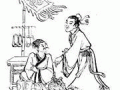 Chinese Idiom 郑人买履
Chinese Idiom 郑人买履...
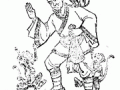 Chinese Idiom 朝三暮四
Chinese Idiom 朝三暮四...
 English
 Japanese
 Korean
 French
 German
 Spanish
 Italian
 Arab
Arab Portuguese
 Vietnamese
 Russian
 Finnish
 Thai
Thai dk
dk